
Colon Cancer Screening Near Me: Colonoscopy Referrals Orange County
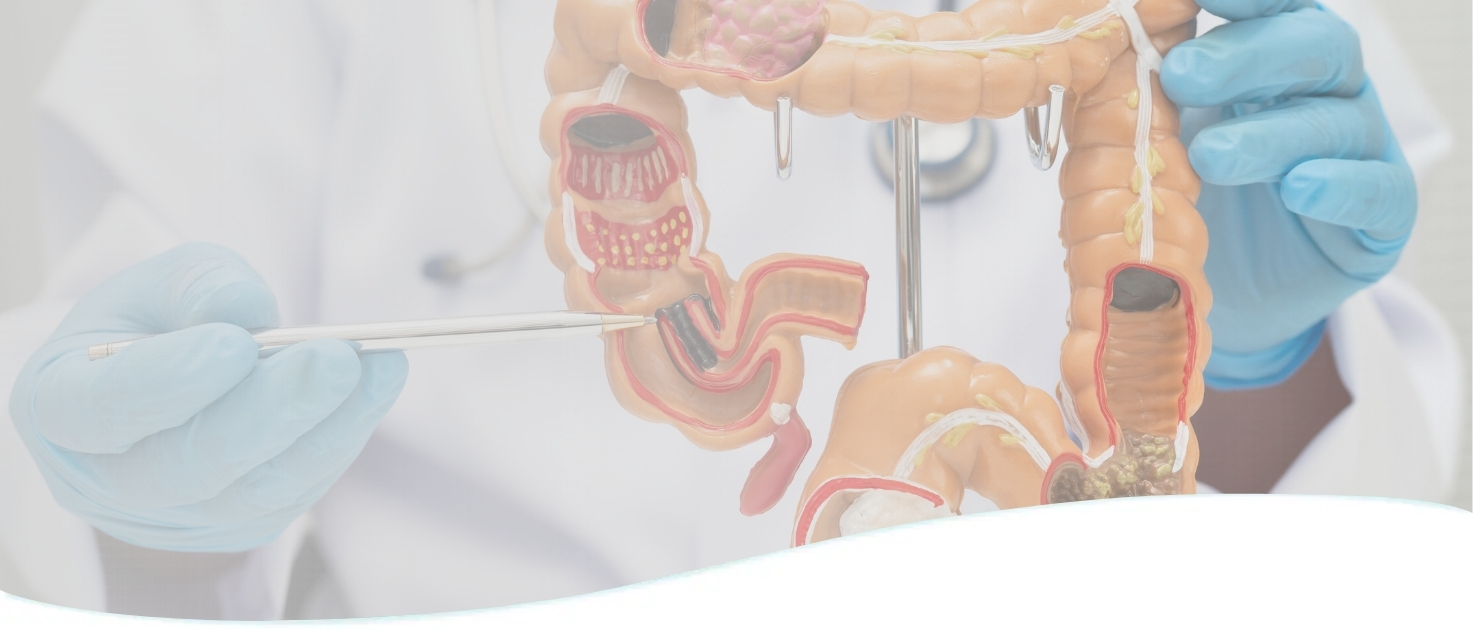
WHY CHOOSE COLON CANCER SCREENING IN NEWPORT BEACH?
Colorectal cancer is the second leading cause of cancer death in the United States — and one of the most preventable when detected early. Unlike many cancers, colorectal cancer almost always develops from precancerous polyps that can be identified and removed before they become malignant. The challenge is that most polyps and early-stage colorectal cancers produce no symptoms at all, which is exactly why regular screening is the standard of care.
At Newport Center Urgent Care in Newport Beach, we provide comprehensive colorectal cancer screening evaluations, stool-based testing options, and colonoscopy referral coordination — with the physician-led continuity that makes screening more than just a checkbox. Dr. Bryan Doonan and our team are here to determine the right screening approach for your individual risk profile and ensure the process moves forward efficiently from your very first visit.
What Colorectal Cancer Screening Actually Involves
Stool-Based vs. Structural Options
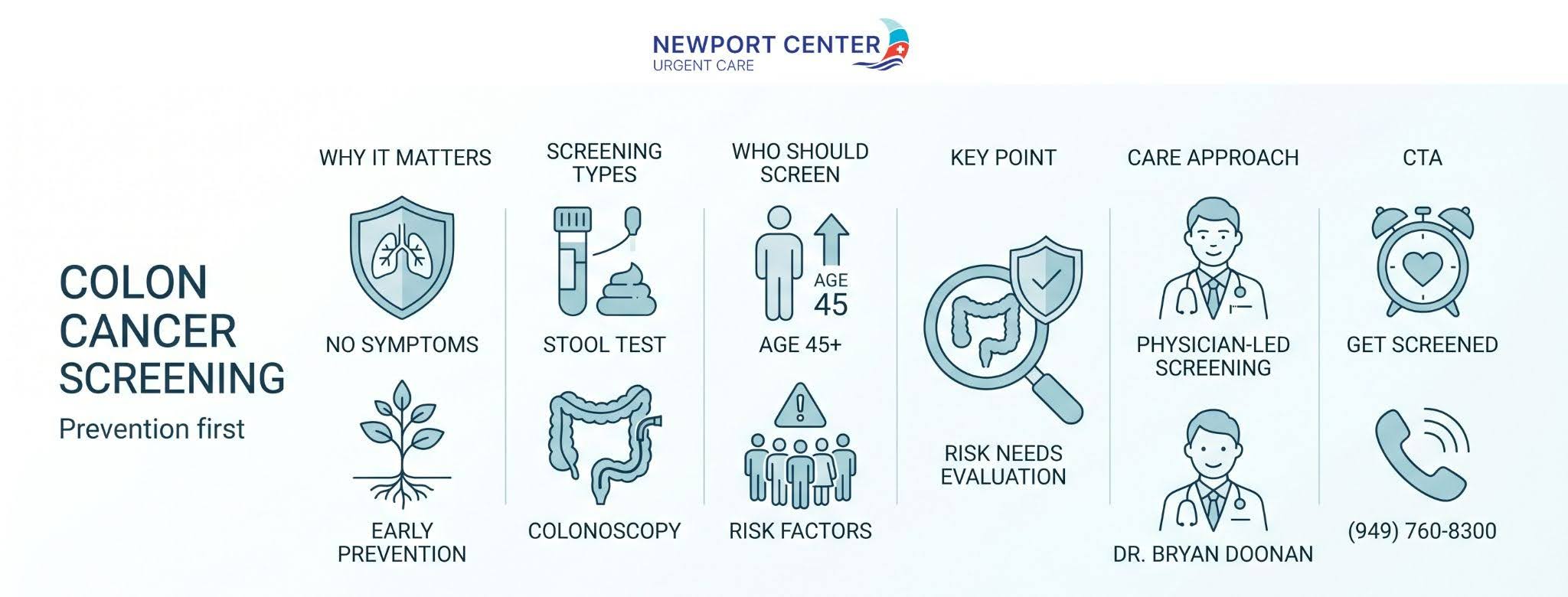
Colorectal cancer screening is not a single test — it is a category of options with meaningfully different methods, intervals, and clinical implications. The two primary categories are stool-based tests and structural exams. Stool-based tests detect blood or abnormal DNA in the stool and are performed at home without bowel preparation.
What Structural Exams Offer
Structural exams — including colonoscopy, CT colonography, and flexible sigmoidoscopy — directly visualize the lining of the colon and rectum to identify polyps, lesions, or other abnormalities. Colonoscopy is the most comprehensive option and the only test that allows for simultaneous detection and removal of polyps in a single procedure. At Newport Center Urgent Care, Dr. Doonan evaluates your risk profile to determine which screening approach is clinically appropriate and coordinates referral to a gastroenterologist when a colonoscopy is indicated.


Who Should Be Screened and When
Average-Risk Adults
The U.S. Preventive Services Task Force recommends that average-risk adults begin colorectal cancer screening at age 45 — a significant update from the previous threshold of 50. This means many adults who were previously told they didn't need screening yet may now qualify. Screening continues through age 75 for most patients.
Elevated-Risk Adults
Patients with a personal or family history of colorectal cancer or adenomatous polyps, inflammatory bowel disease, or inherited conditions such as Lynch syndrome are considered higher risk and typically require earlier and more frequent screening. For elevated-risk patients, colonoscopy is generally the preferred modality. A consultation with Dr. Doonan at Newport Center Urgent Care is the most reliable way to determine which category applies to you and what screening schedule is appropriate.
Screening Eligibility Is Not a Decision Tree — It's a Risk Interpretation
Most colorectal cancer screening guidance online is presented as a simple checklist: if you are over a certain age or fall into a "high-risk" category, you get screened. In practice, clinical decision-making is rarely that clean. Screening eligibility is better understood as a process of interpreting incomplete and often uncertain risk information — not just matching criteria.
When History Is Incomplete
Guidelines from the USPSTF establish broad thresholds for average-risk adults, but they assume access to accurate personal and family history — something many patients simply don't have. Clinicians frequently encounter missing details such as unknown polyp types in relatives, uncertain ages at diagnosis, or incomplete documentation of prior findings.
Risk Stratification Is Not Static
The CDC and the American Cancer Society both emphasize that risk stratification evolves as additional clinical context becomes available. This is particularly relevant for patients with borderline or poorly defined histories — including those with mild inflammatory bowel disease, uncertain prior polyp history, or past exposures that fall outside standard screening categories.
Reconstructing Risk in Real Time
In these situations, clinicians are not simply deciding whether a patient meets criteria — they are actively reconstructing risk. That includes clarifying family history, interpreting prior test results, and determining whether a colonoscopy is warranted even when a patient appears average-risk on paper. The National Cancer Institute reinforces that many risk contributors are cumulative and imperfectly captured in standard intake forms.
What This Means at Newport Center Urgent Care
Colorectal cancer screening is not a binary pathway — it is a clinical interpretation of uncertainty, and the quality of that interpretation directly affects which screening test is chosen and how quickly a patient moves from evaluation to prevention. At Newport Center Urgent Care, Dr. Doonan takes the time to work through that uncertainty with you — reviewing your full history, asking the right questions, and building a screening recommendation that reflects your actual risk rather than a simplified checklist.
Understanding Your Screening Options
Stool-Based Testing
Stool-based tests are a clinically validated, non-invasive alternative to colonoscopy for average-risk patients who prefer to avoid bowel preparation and sedation. The FIT test is performed annually and detects blood in the stool. Multi-target stool DNA tests like Cologuard combine blood detection with DNA biomarker analysis and are performed every one to three years.
An Important Distinction
A positive stool-based test always requires follow-up colonoscopy. It is a screening tool, not a diagnostic one — and that distinction matters for how patients understand and act on their results. At Newport Center Urgent Care, we make sure you understand exactly what a result means and what comes next before you leave our clinic.
Colonoscopy
Colonoscopy remains the gold standard for colorectal cancer screening because it allows direct visualization of the entire colon and the ability to remove polyps during the same procedure. A negative colonoscopy in an average-risk patient typically allows a 10-year interval before the next screening. We coordinate colonoscopy referrals to qualified gastroenterology practices throughout Orange County, ensuring you receive a timely appointment with the right clinical context provided to the specialist.
What Most Screening Listings Don't Address
Search for "colon cancer screening near me" and most results lead directly to gastroenterology practices or hospital endoscopy centers — all focused on performing the procedure itself. Very few address the clinical evaluation that should come before the procedure: determining which test is right for you, establishing your risk category, and reviewing your family history.
At Newport Center Urgent Care, we fill that gap. Dr. Doonan doesn't simply issue a colonoscopy referral — he conducts a thorough evaluation first and provides the specialist with the clinical context that makes your procedure and follow-up care more informed. The American Cancer Society and USPSTF both emphasize that shared decision-making between patient and physician is central to appropriate screening — and that conversation is always where we start.

What Happens After a Finding Is Identified
When Polyps Are Found During Colonoscopy
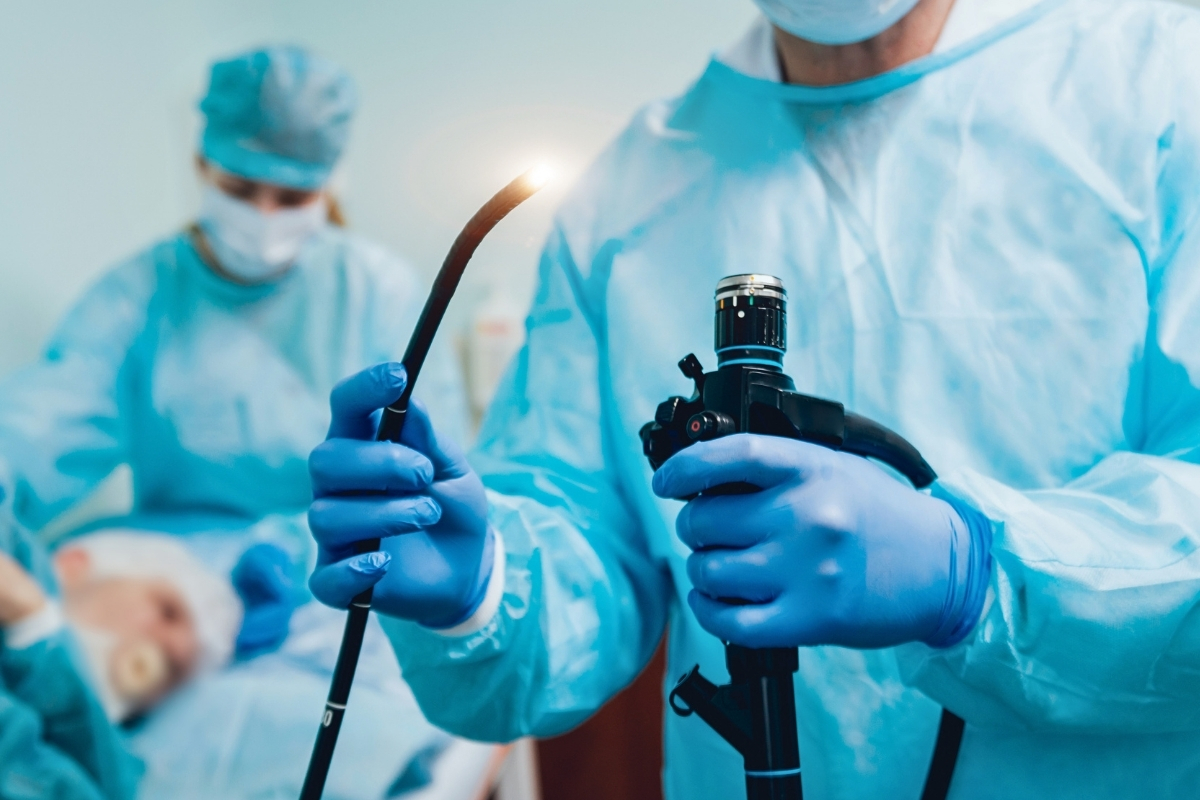
If polyps are identified during a colonoscopy, most can be removed immediately during the same procedure. The removed tissue is sent for pathological analysis to determine whether the polyp is benign, precancerous, or malignant. The type, size, and number of polyps found directly affects your follow-up colonoscopy interval — which may range from one to ten years depending on findings.
When Follow-Up Is Needed After Stool-Based Testing
A positive stool-based test result does not mean you have colorectal cancer — it means follow-up colonoscopy is required. According to the National Cancer Institute, a significant proportion of positive FIT results are explained by benign causes, but every positive result warrants diagnostic colonoscopy to rule out a serious finding. At Newport Center Urgent Care, we coordinate that follow-up pathway directly and ensure you're not left navigating the next step on your own.
When a Cancer Diagnosis Is Made
If a biopsy or pathology report confirms colorectal cancer, care transitions to an oncology team. Our role at that stage is to ensure the handoff is efficient, well-documented, and supported by the full clinical history we've built with you. The Centers for Disease Control and Prevention notes that colorectal cancer diagnosed at an early, localized stage has a five-year survival rate of over 90% — reinforcing that the entire purpose of screening is to reach a diagnosis before symptoms appear.
Get Your Colon Cancer Screening Evaluation Today
We're open seven days a week, walk-ins are always welcome, and same-day appointments are available. Our clinic is located at 360 San Miguel Drive, Suite 107, Newport Beach, CA 92660 — just across from Fashion Island, with easy parking and no referral required to see us. Call us at (949) 760-8300 or visit newportbeachuc.com to schedule your evaluation.
Whether you need a stool-based test, a colonoscopy referral, or simply a conversation about which screening approach is right for you, our team is ready to help. We accept most major insurance plans, including Medicare, and most colorectal cancer screening options are covered at no cost-sharing for eligible patients under current preventive care guidelines.