Skin Cancer Screening Near Me: Orange County Skin Checks
WHY CHOOSE SKIN CANCER SCREENINGS IN NEWPORT BEACH?
Living in Southern California means year-round sun exposure — and for Orange County residents, that adds up over time in ways that aren't always visible until a problem has already developed. Skin cancer is the most commonly diagnosed cancer in the United States, and early detection is the single most important factor in successful treatment. At Newport Center Urgent Care in Newport Beach, we provide skin cancer screenings as part of our comprehensive preventive care services — with same-day appointments, no referral required, and physician-led evaluations you can trust.
Dr. Bryan Doonan and our team understand that most patients don't think about skin checks until something looks or feels wrong. We're here to change that. A proactive screening visit takes only a few minutes and can identify changes that warrant closer attention long before they become serious — which is exactly the kind of care our patients in Newport Beach and across Orange County deserve.
What Skin Cancer Screening Actually Involves
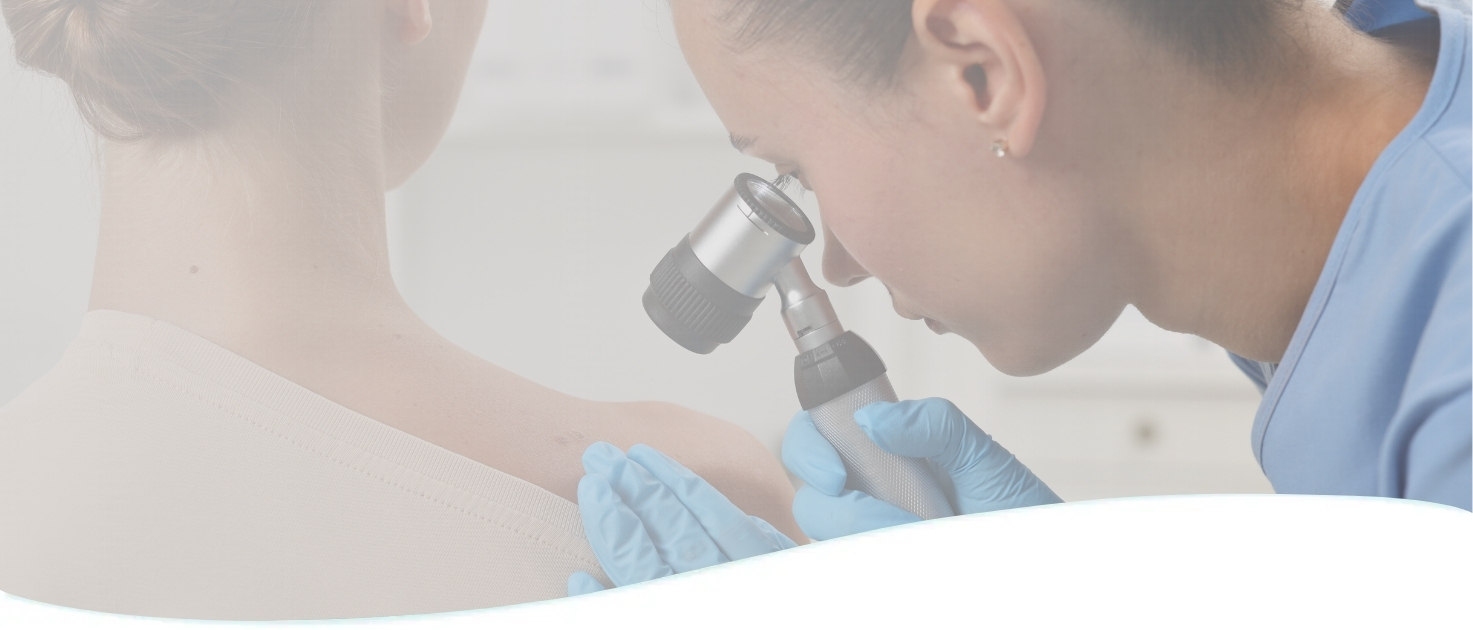
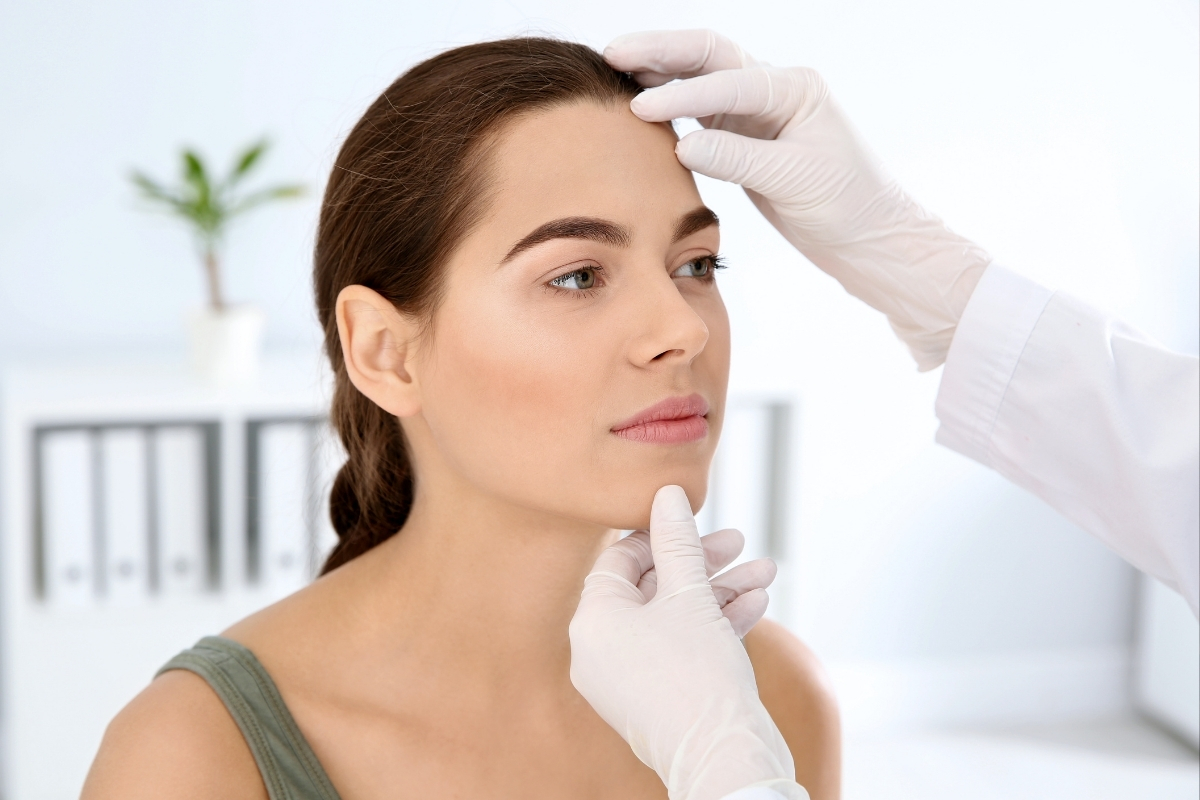
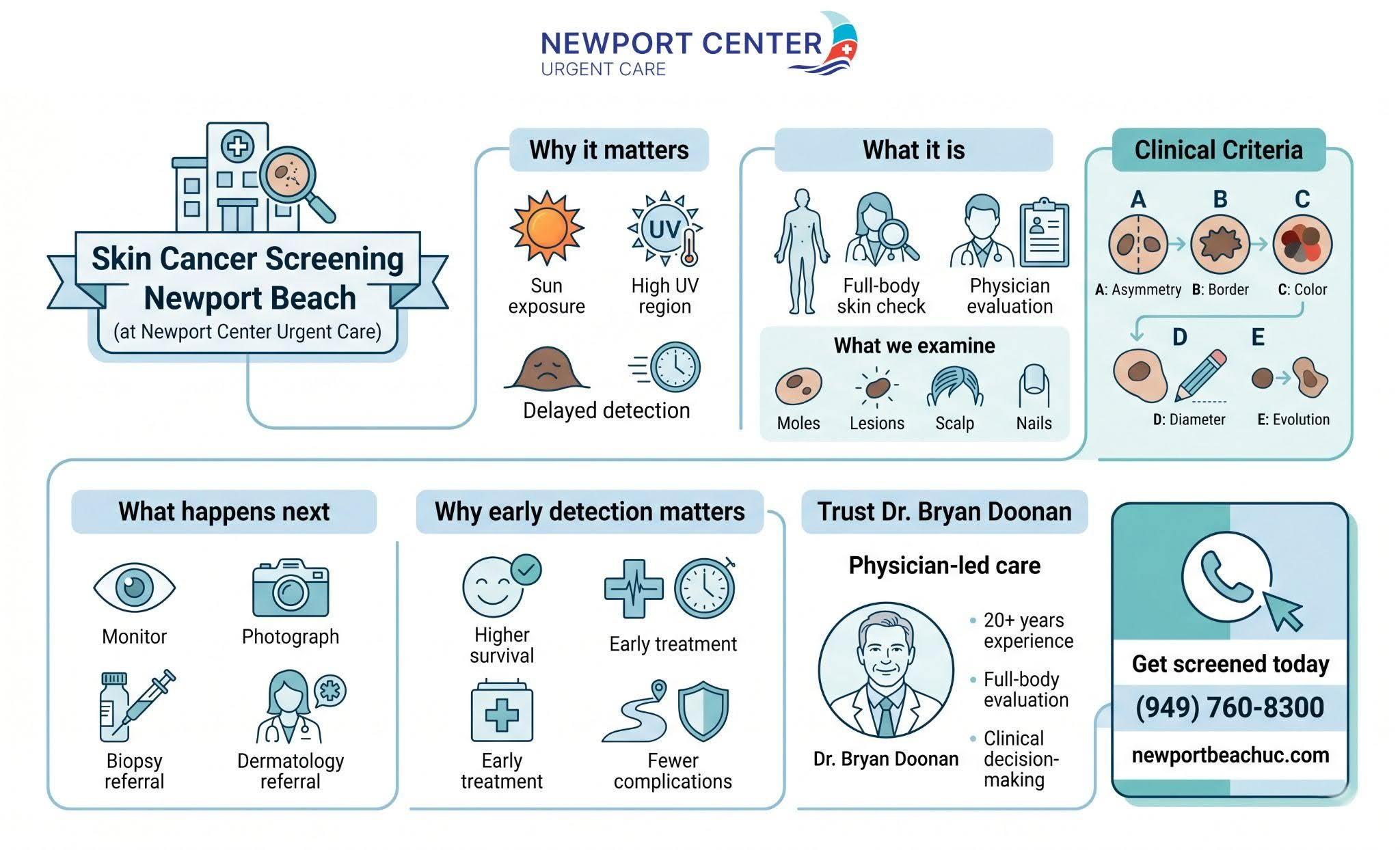
A skin cancer screening at Newport Center Urgent Care begins with a thorough visual examination of your skin — including areas that are difficult to self-examine, such as your back, scalp, and behind the ears. Dr. Doonan assesses moles, lesions, and any areas of concern using established clinical criteria to distinguish normal variation from findings that require further evaluation.
Every screening ends with a clear explanation of what we found and what — if anything — needs to happen next. You won't leave with unanswered questions. If a lesion raises concern, we'll discuss next steps with you directly during the visit, whether that's monitoring, a biopsy referral, or a referral to a dermatologist for specialist evaluation.

Who Should Be Getting Screened in Orange County
Skin cancer does not discriminate by age, skin tone, or lifestyle — but certain factors do increase risk meaningfully. Patients with a history of frequent or intense sun exposure, a personal or family history of skin cancer, fair skin, light eyes, or a large number of moles are at elevated risk and should be screened regularly. In Orange County, where outdoor activity is a way of life and UV index levels remain high for much of the year, those risk factors apply to a significant portion of the population.
The American Cancer Society recommends that individuals at increased risk discuss regular full-body skin exams with their physician. If you've never had a skin check, or if it's been more than a year since your last one, a visit to Newport Center Urgent Care is an easy, accessible way to get that baseline established — without the wait times associated with a dermatology referral.
What We're Looking For: The Clinical Criteria
Clinicians use the ABCDE criteria as a structured framework for evaluating pigmented lesions: Asymmetry, Border irregularity, Color variation, Diameter greater than 6mm, and Evolution or change over time. A lesion that meets one or more of these criteria warrants closer clinical attention, even if it doesn't appear obviously abnormal to the untrained eye.
Beyond the ABCDE framework, we also evaluate for actinic keratoses — rough, scaly patches caused by years of sun exposure that are considered precancerous — as well as basal cell and squamous cell carcinoma presentations. The Skin Cancer Foundation provides detailed public guidance on warning signs, and we apply the same evidence-based clinical criteria in every evaluation at Newport Center Urgent Care.
What Happens After a Suspicious Finding
Most skin cancer screening pages stop at the exam itself — but what happens after a suspicious lesion is identified is where clinical decision-making actually matters most. Physicians don't automatically move to biopsy or referral. Instead, they follow a structured decision pathway based on appearance, risk factors, and clinical behavior over time.
Documentation and Observation
In many cases, the first step is documentation and observation rather than immediate intervention. This may include detailed charting, clinical photography, and comparison against established screening criteria. If a lesion appears low-risk but not entirely benign, we often recommend short-interval monitoring — typically three to six months — to evaluate whether measurable changes occur. This approach is widely supported in evidence-based dermatologic practice to avoid unnecessary procedures while maintaining patient safety, as outlined by the American Academy of Dermatology.
When Escalation Is Needed
When a lesion demonstrates higher-risk features — such as rapid evolution, irregular borders, or bleeding — the pathway shifts toward urgent referral or same-visit biopsy planning. Some cases require dermatology referral for specialized dermoscopy or excision, while others can be biopsied immediately in a primary or urgent care setting. Dr. Doonan will determine the appropriate course of action during your visit and communicate it clearly before you leave.
"Low-Risk" Does Not Mean "Ignore"
It's important to understand that a low-risk finding still requires structured follow-up. Early skin cancers can evolve subtly over time, and ongoing evaluation is a core part of safe detection strategy, as emphasized by the Centers for Disease Control and Prevention. According to the National Cancer Institute, the screening visit is the beginning of a clinical process — not a single moment of diagnosis, but a sequence of informed medical decisions guided by evidence-based practice.


What Most Skin Check Listings Don't Address
Search for "skin cancer screening near me" and most results will emphasize convenience and speed — same-day availability, walk-in access, and quick turnaround. Very few explain what clinical standard the screening follows, who is conducting the evaluation, or what happens if something concerning is found.
At Newport Center Urgent Care, screenings are conducted by Dr. Doonan — a physician with over 20 years of clinical experience — not a medical assistant or non-physician provider following a checklist. Every evaluation follows established clinical criteria, and if a referral to a dermatologist is warranted, we provide the documentation and context needed to make that handoff as smooth and efficient as possible.
The Importance of Screening Beyond What You Can See
A significant portion of skin cancers develop in areas patients cannot easily self-examine — the scalp, upper back, behind the ears, between the toes, and under the nails. Relying solely on self-checks, even for diligent patients, leaves meaningful blind spots in surveillance. A full-body clinical exam covers the entire skin surface systematically, including the areas most commonly missed in at-home monitoring.
This is particularly relevant for patients who have been told their skin "looks fine" during a general checkup that wasn't specifically focused on dermatologic evaluation. A dedicated screening visit at Newport Center Urgent Care is structured around the skin specifically — giving each area the systematic attention it requires rather than a brief glance as part of a broader physical.
Get a Skin Cancer Screening in Newport Beach Today
We're open seven days a week, walk-ins are always welcome, and same-day appointments are available for patients who prefer to book ahead. Our clinic is located at 360 San Miguel Drive, Suite 107, Newport Beach, CA 92660 — just across from Fashion Island, with easy parking and no referral required. Call us at (949) 760-8300 or visit newportbeachuc.com to schedule your screening.
If you have a specific spot or lesion you're concerned about, or if you simply want a baseline full-body check, our team is ready to see you. We accept most major insurance plans, including Medicare, and our staff will walk you through what to expect before your visit so you arrive prepared.